
Birding in February 2010
Setting the Scene.
From my experience the best place to watch birds is close to home. If you have a garden you can of course watch through the window. Locally, our gardens, fields, hedgerows and woods form a huge habitat mosaic of great importance to birds as they provide cover, food, nesting and roosting sites. The larger and more varied your garden and the nearer it is to other habitats such as woods and rivers, the more species it will attract but even a small village garden will have birds worth watching. You can encourage a greater range by providing bird tables and nut feeders, nest boxes and water in the form of a birdbath or pond. Planting selected shrubs, trees and hedges that provide cover, nest sites and/or food (insects or berries) also brings out the birds.
Around Weston it is surprising how much you can see if you watch regularly. Looking out from our conservatory we may see a Grey Heron standing in our pond or Canada Geese on their way to and from the Twin Lakes at Hartleton, as well as the more predictable Blue Tits, Goldfinches, Greenfinches, Robins, Blackbirds and other typical garden birds. Swifts, House Martins and Swallows dive and glide for insects overhead in summer, and on an autumn night I can hear the thin lisping calls of a passing flock of Redwings newly arrived from northern Europe. A short walk down to the lakes adds a variety of ducks, coots and gulls as well as the chance of a Kingfisher and our resident Great Crested Grebe or if we are lucky a Chiffchaff.
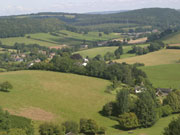
The land around Weston-under-Penyard can be divided into two types of habitat: arable land and pasture. The best for birds are our traditional farms, with a mix of crops and livestock with features including hedges, woods and ponds. Here, a wide range of birds breed, from Swallows, Wagtails, Doves and Barn Owls among farm buildings to Partridges and Skylarks in the fields and many species, such as Yellowhammers, Sparrows and Whitethroats, in the hedgerows, while winter brings different birds, including, Redwings and Fieldfares.
You are most likely to see the greatest variety of birds on the edges of a habitat. The margins around Penyard Park are places where you may see birds, as they come out into the open. Trees that die and decay provide places for insects to live and enables Woodpeckers to bore holes that after a year are often taken over by other hole-nesting birds such as tits and Nuthatches. The dense growth and the layer of tangled shrubs on the outer edges of these areas suits birds such as Wrens and Garden Warblers which like skulking in the undergrowth. Overhead will be Buzzards, Sparrowhawks or the rare Goshawk.
D.H.