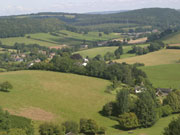

Farming in October 2011
Harvest is upon us again. The arable crops are all in the barn and apple harvest is only a couple of weeks away. Despite the very dry spring our wheat harvest was pretty good. Unlike our colleagues in the far east (East Anglia) the rain came just in time to save the day and yields have been pretty good. Unfortunately the same cannot be said of our field beans (similar to broad beans). We grow beans as a source of home-grown protein for the cattle. The alternative is expensive imported soya. The only thing bumper about the beans was the crop of weeds we managed to grow. If quizzed by my Farming Year neighbours I claimed the field was under environmental stewardship and it wasn't a failed field of beans but a supersized Skylark plot.
Disappointingly The Harewood End Society doesn’t have a "best weeds in the world" class, shame since I would have definitely stood a chance. We did, however, win the Poultry Cup and the Conservation Cup this year. We've not won either of these classes before and its great to have some different cups to look at.
We are continuing to struggle with TB and the milking herd seems to be particularly badly hit lately. Over 14 cows have had to be destroyed in the last 8 months. We are a closed herd, which means we breed all our replacement cows on farm rather than buying in. This policy means we can use the knowledge of our cow families over many generations to selectively breed cows that suit our system whilst reducing our exposure to diseases imported with bought in livestock. However, responding to large losses takes time and it will be 3 years before the extra cows we are breeding now reach the herd. Fortunately the milking robots are working well and the increase in yield since their installation is helping to mitigate the fall in cows numbers.
Roger the ram was separated from his flock once lambing was over and he has settled down to a summer with the cows. Since the cow yards are not Roger-proof he wanders at will. He chooses to spend his mornings leading the milking cows out to graze and then heads back to the yard when the hunger pangs start to bite. Just before a cow is due to calve she is given extra food to help her cope with the strain of an ever growing calf and to fuel her milk production. This period is called steaming up. Roger has grasped the concept of steaming up with enthusiasm so much so we now call him Podger.
Robert Davies, Hopes Ash Farms