
Farming in July 2010
Hopes Ash Farm opened it gates for this year’s Open Farm Sunday - we were visited by 500 people and raised £450 for Muscular Dystrophy. Nobody got hit by an off-course welly, despite the route to the toilets being perilously close to the welly wanging and the 6 turkeys taken out of the poultry house didn’t expire from the strain of being free range for a day. I would like to take this opportunity to thank everyone who helped out from face painting, manning the BBQ or the craft table, the loan of pedal toys etc etc. We couldn’t manage without you.
The week before Open Farm Sunday was a little hectic and I found myself caught between the devil and the deep blue sea. I’m not going to say who’s who but the MD (My Dad) goes round stating "that’ll do" swiftly followed by Rachel saying "you can’t leave it like this". They end up trading; Dad is allowed to keep his treasured plumbing fittings just where he needs them as long as the electric fence stakes which have been propped against the barn since last Open Farm Sunday are removed to the scrap heap.
It can pay to have a short memory in Farming Year and I always approach silaging with naïve optimism, the trials and tribulations of previous seasons are long forgotten. However, this year’s first cut silage was one of the most trouble-free that I can remember. The weather played ball, the equipment didn’t breakdown and the Water Board wasn’t blocking any roads!
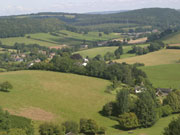
Despite appearances, grass isn’t all the same. Some grass is planted to crop heavily for 2 years before a different crop is planted. This type of grass is very vigorous and can be cut up to four times a year. Other grass is designed to be permanent pasture and grows more slowly but keeps growing year after year. Grass is one of the main weapons against soil erosion. Soil is a major pollutant of streams and rivers, silting up drains and ditches and damaging ecosystems. Grass helps in two ways. Firstly, the leaf soaks up all but the heaviest of downpours like a sponge enabling the water to soak into the ground over a period of time rather than running straight off. Secondly, the roots bind the soil together preventing soil being eroded and washed away with the over-land flow of water. Just over 50% of Hopes Ash Farm is either grass or woodland.
Robert Davies, Partner, Hopes Ash Farms
Farming Fact: On Open Farm Sunday 2010 420 farms were visited by 150,000 visitors.